

New Solterra Brings Improves Efficiency
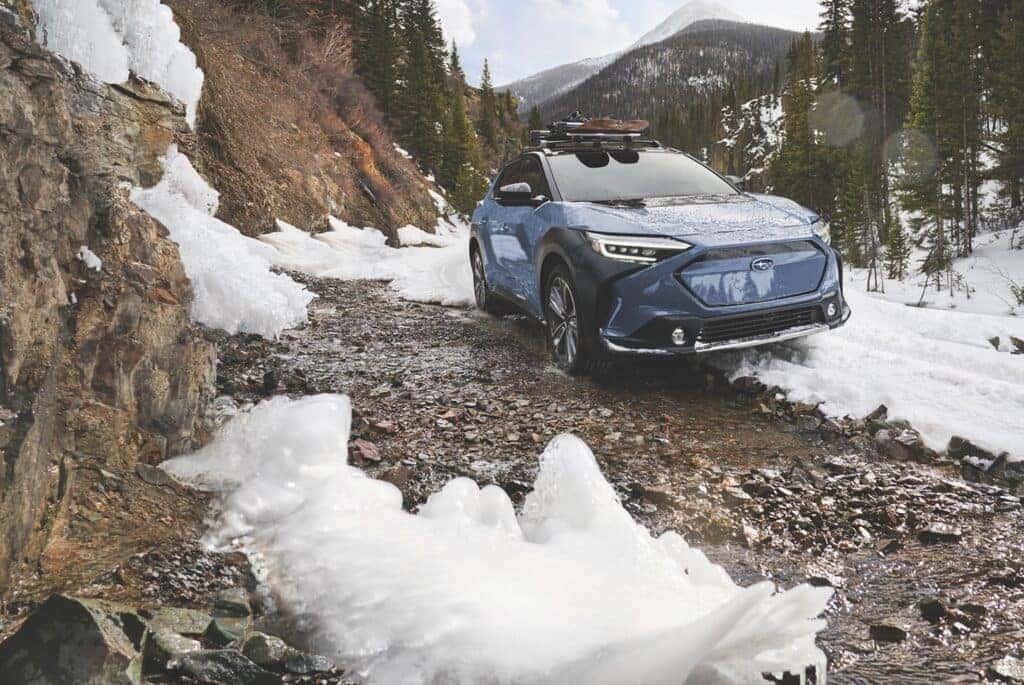
Electric cars are clearly sophisticated machines, chock full of technologies. In many ways, they are similar to the early stage of gas engines almost a century ago, long before fuel injection, multi-valve heads, electronically controlled transmissions, and a nearly unending list of mechanical improvements that we see today. So it is with EVs. Every year, we see incremental technical improvements that make them better. Subaru is on this path with the Solterra EV, and Subaru of Rochester is here to tell you about it.
The Solterra is Subaru’s first modern electric vehicle. It competes in the compact crossover class with ICE models like the Toyota RAV4, Honda CR-V, and Subaru’s own Forester and Crosstrek. Like all Subarus save the BRZ, all-wheel drive is standard across the model line. While it comes out of a joint venture with Toyota, Subaru was in charge of the all-wheel drive tuning and developed an EV version of its X-Mode off-road traction system, which was found on other Subaru models.
Thus, it may come as no surprise that the Solterra’s 8.3 ground clearance is higher than that of its close EV crossover competitors. In Minnesota, that extra inch or two can make a difference in whether it gets high-centered after a significant snowfall.
Making the Efficient More Efficient
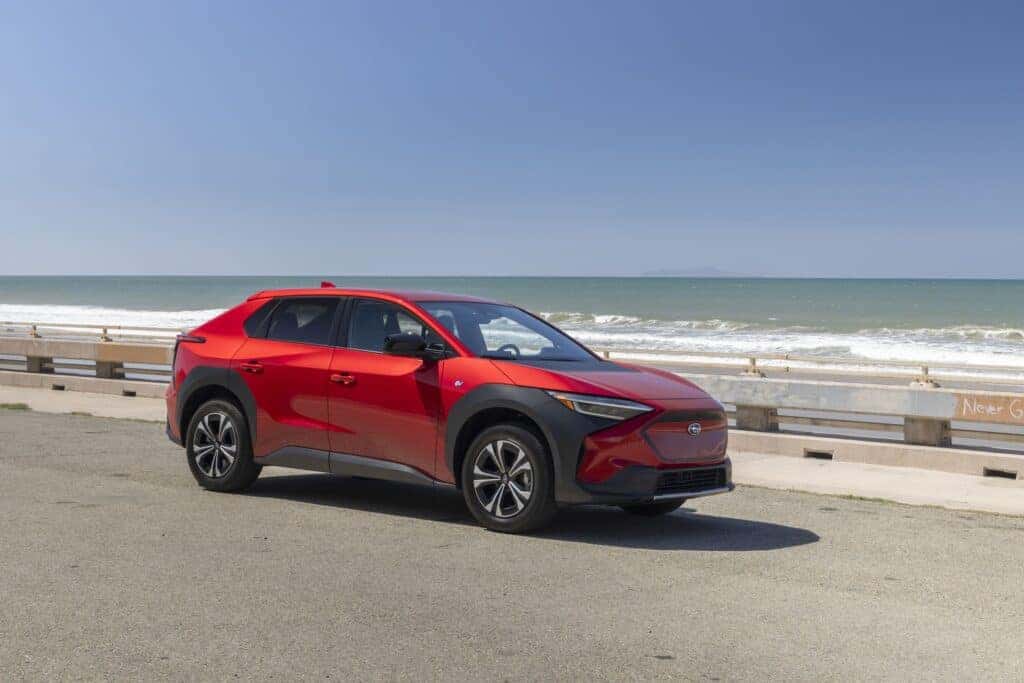
One of the most significant changes is an increase in efficiency. That is not a term you often hear with EVs because all of them are so much more efficient than gas-powered vehicles. A typical gas-powered vehicle will only get about 20% of the energy stored in gasoline to the wheels to propel the car. The other 80 percent is wasted on heat and parasitic auxiliary components that draw away energy. So when you purchase $5 worth of gas, only $1 actually moves your car. In contrast, EVs are about 89% efficient.
Even so, Subaru sought ways to make its EV drivetrain more efficient. A figure you are likely to hear more and more on this subject is how many miles per kilowatt-hour (kWh) of battery size. It is the gas equivalent of getting more miles per gallon rather than just installing a bigger gas tank. The Solterra is now rated at about 3.1 miles per kWh. Of course, this varies by speed, temperature, terrain, and other figures. However, the Solterra will let you see your average miles per kWh, much like gas-engined vehicles track average mpg. A reviewer for Green Car reports he averaged 3.4 miles per kWh on a 400-mile drive, though he adds that the weather was ideal: dry and between 55 to 70 degrees.
With its 72.8 kWh battery pack, the Solterra has about 65 kWh of usable capacity, which gives it an estimated operating range of 222 miles on the Limited and 227 miles for the Premium and Touring.
Steering Wheel Adds Form and Function

Another update on the Solterra is a squared-off steering wheel. Sure, it looks snazzy, but its rear purpose is to assist in viewing the gauge cluster. In the Solterra, it is viewed above the steering wheel rim rather than through it. This location brings the information closer to your view of the road, essentially doing what head-up displays and windshield projection displays are designed to do.
Other Changes
Paddle shifters can now adjust regenerative braking on the fly, so you can easily adjust the vehicle’s non-braking deceleration based on even temporary conditions.
The final change is for all you roof-top campers out there, which is the new roof bars can hold a static load of up to 700 pounds.
Sure, in the decades to come, we can expect EVs to drive and charge faster, but that is no reason not to start emission-free driving now with a visit to Subaru of Rochester.
0 comment(s) so far on New Solterra Brings Improves Efficiency